It finally feels like winter here. Yesterday the air smelled deceptively of snow, but it turned out the heavens were only brewing cold air and freezing rain. Unless it is the bone chilling cold of the winters I grew up in, I refuse to believe I need a hat and gloves. In my mind Istanbul is still the sweltering city I came to over four months ago now. This is a new side of the city; the hard to catch a cab, swaddled under layers of clothing, can-see-my -breath–so-cold-side. It is a sort of cold that is usually thawed out by Salvation Army bells and decorations in the Marshall Fields windows (before it became Macys) and shopping for presents that will likey be returned before New Years. In recent years the cold only means its getting dark earlier, there is slush on your good boots, and your bus is delayed, you’re eating more and worrying about getting fat, or feeling motivated to go to Bikram yoga to work it off and feel warm for awhile. I do not much like this cold side of Istanbul that lacks the perks of winters I know, but then again I’ve been chasing warmth for many years.
I am headed South tomorrow, but I don’t know if Cyprus will be to Istanbul what Miami is to Chicago. The holiday coincides with Kurban Bayram, which traditionally is a day for the sacrific of cattle. My students gave me chocolate and told me eating sweets is what the holiday is all about. I’m sure it is both, or neither.
At a British hosted holiday party, some Turks asked my American colleages what their Christmas traditions were. Going shopping? Gorging ourselves at the dinner table? The beach, someone offered. We go to the beach and toss the frisbee around. That’s a nice tradition. Anyone can participate. You probably don’t have to be of a particular sex or age. It does not involve the ritual slaughter of animals. It does not involve a particular set of beliefs, like reverence to the frisbee god or frisbee commandments. The closest thing to a tradition I can think of is celebrating my mother’s Christmas birthday. Traditions seem passe, don’t they? I could give you a litany of what Jews do on Hanukkah, or Christains do on Christmas, but as for myself, well, I am not sure if there are many things I did then, plan to do here in Istanbul, or will do in the future.
The value of a thing comes in its repetition. There is nothing intrinsically special about the act of hanging ornaments or lighting the menorah. It is sacred or special precisely because it has been done before; specifically with the people you care about.
I am working on Christmas day, but there are plenty of holiday parties and events to keep me busy. I went over to Joanna’s to put up her fake Christmas tree. We listened to carols and ate hummus and beyaz penir (a cheese similar to feta) sandwiches on olive cibatta. I drank tea instead of diet coke, and eventually got a cab home in the freezing rain.
Wednesday, December 19, 2007

Friday, December 7, 2007
For the record: I am not a fan of airing ones dirty launry in public. Nor do I find value in blogs that document every hangnail and heartache as though worthy of front page news. I know, I know, its the facebook phenonmena, but there is something to be said for keeping some things to yourself. See what I mean? Now you're wondering what they are....
So lets just not call this dirty laundry....I mean, its not really laundry if you fold it neatly and put in back in the drawer even if it has stains, right? So please, be my guest: examine my blouse with the coffee stains, my dirty gym socks, my skirt with the red permanent marker on the behind. I haven't sorted it into light and dark.
I am running – to North Beach, from Santa Monica to Venice and back, down McCormick Ave past sculpture park, around and around the Claremont colleges, through the Cook County forest preserve where sparrow wings are smelts shimmering along the Bosphorus from Yenikoy to Tarabiya. I am moving on fast forward, or they are going in slow motion, the fisherman who raise up hooks of rows of floundering fish, their tackle boxes cluttering the walkway. They have the right of way, not power walkers, not families strolling, not the runner, me. Quick: a simit stand with fresh sesame rings to the left, a tea table to the right, a bucket with half-alive bait straight ahead, get out of my fucking way.
There are so many places I want to go: The teahouse up and around the bend, the place called Passion with cheesecakes.I stare at the plates but people think I am looking at their faces....but I won't go alone. Or I will, and then I will want to leave.
Now I am walking, in my baggy pants and bulky sweatshirt, as unattractive as possible. I plug in my ipod but I can't find a soundtrack. I can’t listen to Dixie Chicks...I can’t listen to Shakira...I can’t listen to anything I listened to in California...I start, I stop. I break into run, and there are cars parked on the sidewalk. I step off the curb, and a motorcycle comes zipping around the bend. I start running, and a family is coming. I run in front of cars because I will be waiting until next December if I expect the world to stop for me here. I run across streets, accross cobblestones, accross my students. A boy and a girl. They are sitting, sweetly, on a bench. They smile, I wave. They seem startled to see me as a person instead of a teacher. They are having a talk, but I can tell by their postures they are new at these kind of talks, the boy and girl on a bench by the water on a Sunday morning kind of talks. I want to sit behind them and tell them what to say. Will they break up when they leave for college? Are they even together? Will they think of each other fondly or grow bitter?
Now I am running again. Fast. Sweating, wearing an unsupportive sports bra, I take up as much space as I please as my arms pump back and forth an my legs keep time with the bicycle way down the road in front of me. Rollerbladers in oakley sunglasses are the only insects on the trail, and moms who just had babies inside now push them in strollers. I know every curve and when I get to the tree with the tangled roots I'm almost there. I'm almost there. Thousands of miles and amost there. There is no fear that I will get lost, or find myself in a neighborhood of headscarved women who watch. It would be presumptuous to say judge.
I know: I’ll see if they sell soy sauce and ginger at the Macro center. I know: I’ll buy a cake and invite people over to eat it. I’ll get coffee and read the paper. But not alone. I know: I will make something. Yes, that sounds like a brilliant idea.
I am tired. I may or may not do crunches. I will probably rush to water in the form of a drink or a shower. I will catch up on foreign affairs in this order: CNN, Time, Tabloid. I will admit to myself I perfer novels to news and I think fiction is more honest than the truth. I will get my book and read until I will scold myself for being unproductive.
I will eat simply because its time. I will not talk to anyone. I will grade papers. I will have an inspiration for a lesson, decide it won't work, and do it anyway. I will sit on an overcrowded bus. I will do yoga and remove all stress form my life. I will wait for a call from anyone that says they love me and miss me. I will wonder what I am doing.
So lets just not call this dirty laundry....I mean, its not really laundry if you fold it neatly and put in back in the drawer even if it has stains, right? So please, be my guest: examine my blouse with the coffee stains, my dirty gym socks, my skirt with the red permanent marker on the behind. I haven't sorted it into light and dark.
Why does a woman spends her Saturday ripping apart a chicken to make stock? Carrots, celery, onion, salt, bay leaf, and the bones of a dead bird. Headline: Former vegetarian retches as she listenes to sockets pop and wishbone snap.
I am running – to North Beach, from Santa Monica to Venice and back, down McCormick Ave past sculpture park, around and around the Claremont colleges, through the Cook County forest preserve where sparrow wings are smelts shimmering along the Bosphorus from Yenikoy to Tarabiya. I am moving on fast forward, or they are going in slow motion, the fisherman who raise up hooks of rows of floundering fish, their tackle boxes cluttering the walkway. They have the right of way, not power walkers, not families strolling, not the runner, me. Quick: a simit stand with fresh sesame rings to the left, a tea table to the right, a bucket with half-alive bait straight ahead, get out of my fucking way.
There are so many places I want to go: The teahouse up and around the bend, the place called Passion with cheesecakes.I stare at the plates but people think I am looking at their faces....but I won't go alone. Or I will, and then I will want to leave.
Now I am walking, in my baggy pants and bulky sweatshirt, as unattractive as possible. I plug in my ipod but I can't find a soundtrack. I can’t listen to Dixie Chicks...I can’t listen to Shakira...I can’t listen to anything I listened to in California...I start, I stop. I break into run, and there are cars parked on the sidewalk. I step off the curb, and a motorcycle comes zipping around the bend. I start running, and a family is coming. I run in front of cars because I will be waiting until next December if I expect the world to stop for me here. I run across streets, accross cobblestones, accross my students. A boy and a girl. They are sitting, sweetly, on a bench. They smile, I wave. They seem startled to see me as a person instead of a teacher. They are having a talk, but I can tell by their postures they are new at these kind of talks, the boy and girl on a bench by the water on a Sunday morning kind of talks. I want to sit behind them and tell them what to say. Will they break up when they leave for college? Are they even together? Will they think of each other fondly or grow bitter?
Now I am running again. Fast. Sweating, wearing an unsupportive sports bra, I take up as much space as I please as my arms pump back and forth an my legs keep time with the bicycle way down the road in front of me. Rollerbladers in oakley sunglasses are the only insects on the trail, and moms who just had babies inside now push them in strollers. I know every curve and when I get to the tree with the tangled roots I'm almost there. I'm almost there. Thousands of miles and amost there. There is no fear that I will get lost, or find myself in a neighborhood of headscarved women who watch. It would be presumptuous to say judge.
I know: I’ll see if they sell soy sauce and ginger at the Macro center. I know: I’ll buy a cake and invite people over to eat it. I’ll get coffee and read the paper. But not alone. I know: I will make something. Yes, that sounds like a brilliant idea.
I am tired. I may or may not do crunches. I will probably rush to water in the form of a drink or a shower. I will catch up on foreign affairs in this order: CNN, Time, Tabloid. I will admit to myself I perfer novels to news and I think fiction is more honest than the truth. I will get my book and read until I will scold myself for being unproductive.
I will eat simply because its time. I will not talk to anyone. I will grade papers. I will have an inspiration for a lesson, decide it won't work, and do it anyway. I will sit on an overcrowded bus. I will do yoga and remove all stress form my life. I will wait for a call from anyone that says they love me and miss me. I will wonder what I am doing.
Monday, November 26, 2007
Turk Everlasting
A woman fainted on the bus today. She was standing a few bodies away from me, holding onto the rail with a glazed expression in her eyes, as was I.
But that’s beside the point. I wanted to write about a quintessential Istanbul day: I ventured out on my own and bought some reeds for my friend’s Zurna (a Turkish musical instrument). On the way back I finally discovered where the famed freshly squeezd pomegranete juice is sold. I then finally made it to the Blue Mosque and Hağia Sophia, two of the most important sites that I am embarassed to say I have not yet visited in my three months time here. I bought some generic postcards, a pair of pants from a Nepalese imports store, and... and a woman fainted on the bus.
I can only write about the woman. Turkish buses are beyond crowded. When it is hot outside, it is hot in the bus. When it slightly less than a summer's day, Turks blast the heat, and therefore it is hot on the bus on cold days. I am lucky to find a pocket of fresh air to breathe, much less a seat.
I was lamenting my own tired feet when I saw a person laying in the narrow aisle. I didn’t hear her fall, but I felt a human wave flow toward me as bodies moved out of the way. One minute she was standing, the next she was not. Those surrounding her looked down at the body, the up at one another, giving each other the universal look for “oh shit.” Some people helped her up and place her in a seat. I wished I had saved my water bottle. I wished I knew more Turkish.
I did not know whether to look away. I was too close to ignore what was going on, too far to actually do something. I assumed that it was a routine faint, the kind to be expected from standing in traffic during rush hour on an overcrowded bus. I imagined seeing a look of shock, confusion, or perhaps even shame or embarassment appear on her vapid face when she came to and tried to explain to others what happend. Would she be the type to soak up all the attention, or would she feel ashamed and try to modestly brush it off?
I would never find out. A minute (or was it two? Or five?) and she was still unresponsive. She had her eyes closed, mouth hanging open, face catatonic and pale. There was a second round of confused looks when old buxom women who brushed her face with their wet-naps and gently slapped the apples of her cheeks could not elicit the slightest response.
There is always one: The hero. Nondescript, balding, public bus rider hero. He made is way calmly to the back of the bus. He held up a mirror to her mouth to see if she was breathing. I didn’t see it fog up. Other than that, he didn’t do much besides pat her on the cheeks a couple of times and orchestrate the passing of napkins and empty water bottles. He made a call on his cell and said something in Turkish that I didn’t understand.
It was a state of controlled chaos. My first reaction was to do something. My second was that I had no idea what to do, and if I did, how could I communicate that I was trying to help. I wondered if I should do CPR. I learned it, but could I remember it? Then again, maybe she was breathing. It looked like the man had the situation in control. People kept asking for water, and calling to the bus driver to make a wrong turn and go the direction of the hospital.
I had geared myself up for tune-out mode. Try not to bump anyone or look strange men directly in the eye. Don’t get pressed to death when the automatic doors swing open. Be ready to pounce on the first seat that opens up, unless there are frail looking old ladies around. I had successfully entered into the zone where I amthere but not really there. I was abruptly adusting to the fact there was a crisis playing out before my very eyes. I was surprised by the dramatic nature of it, but also the calm, as if we had rehearsed it and merely took our places: Woman passes out hankies, man calls hospital, girl in back stands and stares, thinking.
The bus took a wrong turn toward the hospital. The hero took of his leather jacket, scooped her up as if carrying a bride across the threshold, and barreled down the stairs of the bus as he presented her to the hospital, where medics were waiting with a stretcher. A number of people from the bus, including myself, followed him in to see what was going in. As soon as she touched the stretcher, they started wheeling her towards two swinging doors. The man shrugged his shoulders, and since I couldn’t understand what he said, I’ll pretend it was this: “What can anyone do now? My job here is done.”
Taking his cue, the rest of the passengers walked out, and we all went our separate ways.
I wanted to describe my glorious day off in Instabul, but a stranger's mortality got in the way.
But that’s beside the point. I wanted to write about a quintessential Istanbul day: I ventured out on my own and bought some reeds for my friend’s Zurna (a Turkish musical instrument). On the way back I finally discovered where the famed freshly squeezd pomegranete juice is sold. I then finally made it to the Blue Mosque and Hağia Sophia, two of the most important sites that I am embarassed to say I have not yet visited in my three months time here. I bought some generic postcards, a pair of pants from a Nepalese imports store, and... and a woman fainted on the bus.
I can only write about the woman. Turkish buses are beyond crowded. When it is hot outside, it is hot in the bus. When it slightly less than a summer's day, Turks blast the heat, and therefore it is hot on the bus on cold days. I am lucky to find a pocket of fresh air to breathe, much less a seat.
I was lamenting my own tired feet when I saw a person laying in the narrow aisle. I didn’t hear her fall, but I felt a human wave flow toward me as bodies moved out of the way. One minute she was standing, the next she was not. Those surrounding her looked down at the body, the up at one another, giving each other the universal look for “oh shit.” Some people helped her up and place her in a seat. I wished I had saved my water bottle. I wished I knew more Turkish.
I did not know whether to look away. I was too close to ignore what was going on, too far to actually do something. I assumed that it was a routine faint, the kind to be expected from standing in traffic during rush hour on an overcrowded bus. I imagined seeing a look of shock, confusion, or perhaps even shame or embarassment appear on her vapid face when she came to and tried to explain to others what happend. Would she be the type to soak up all the attention, or would she feel ashamed and try to modestly brush it off?
I would never find out. A minute (or was it two? Or five?) and she was still unresponsive. She had her eyes closed, mouth hanging open, face catatonic and pale. There was a second round of confused looks when old buxom women who brushed her face with their wet-naps and gently slapped the apples of her cheeks could not elicit the slightest response.
There is always one: The hero. Nondescript, balding, public bus rider hero. He made is way calmly to the back of the bus. He held up a mirror to her mouth to see if she was breathing. I didn’t see it fog up. Other than that, he didn’t do much besides pat her on the cheeks a couple of times and orchestrate the passing of napkins and empty water bottles. He made a call on his cell and said something in Turkish that I didn’t understand.
It was a state of controlled chaos. My first reaction was to do something. My second was that I had no idea what to do, and if I did, how could I communicate that I was trying to help. I wondered if I should do CPR. I learned it, but could I remember it? Then again, maybe she was breathing. It looked like the man had the situation in control. People kept asking for water, and calling to the bus driver to make a wrong turn and go the direction of the hospital.
I had geared myself up for tune-out mode. Try not to bump anyone or look strange men directly in the eye. Don’t get pressed to death when the automatic doors swing open. Be ready to pounce on the first seat that opens up, unless there are frail looking old ladies around. I had successfully entered into the zone where I amthere but not really there. I was abruptly adusting to the fact there was a crisis playing out before my very eyes. I was surprised by the dramatic nature of it, but also the calm, as if we had rehearsed it and merely took our places: Woman passes out hankies, man calls hospital, girl in back stands and stares, thinking.
The bus took a wrong turn toward the hospital. The hero took of his leather jacket, scooped her up as if carrying a bride across the threshold, and barreled down the stairs of the bus as he presented her to the hospital, where medics were waiting with a stretcher. A number of people from the bus, including myself, followed him in to see what was going in. As soon as she touched the stretcher, they started wheeling her towards two swinging doors. The man shrugged his shoulders, and since I couldn’t understand what he said, I’ll pretend it was this: “What can anyone do now? My job here is done.”
Taking his cue, the rest of the passengers walked out, and we all went our separate ways.
I wanted to describe my glorious day off in Instabul, but a stranger's mortality got in the way.
Friday, November 16, 2007
Breaking Bread
This weekend I did something I thought I’d never do. Never in my wildest imagination did I contemplate something so delectable, so savory, so satisfying.
I baked bread. Ha.
Well, I had help of course. It started when my department head suggested that teachers (meaning the single females) come over for a day of bread baking. Although the idea seemed quite random, I was up for a challenge. The alterior motive of bonding and beating the blues of rain days in Istanbul just before the break made it well worth it.
I've baked bread a few times before: Once on a junior high whim with a friend who thought it would be fun to make the teddy bear bread recipe she found in a book, and a few times with my sister in an attempt to make challah for pseudo-traditonal Shabbat dinners. However, I certainly would not go so far as to say I actually know how to make bread. It always seemed like one of those esoteric skills known only by grandmothers who came from Eastern Europe or Martha Stewart types who always had matching napkins and placemats. Although my past attempts tasted good, they certain wouldn’t pass a taste test by a more refined consumer. Bread baking certainly did not enter the realm of modern woman who has only recently learned to use a chopping knife.
Alas, this was no Betty Crocker bakeoff. There were no aprons or hair nets in sight (okay, there was a rolling pin) it did not feel provincial or trite in any way. Along with my English teacher counterparts, we brought our ingredients to the spacious kitchen of our fearless leader. We had spent the week contemplating which type of bread to make, and by chance covered all the taste buds with our selections: sweet cinnamon raisin bread, savory garlic and herbs, aromatic olive, and my own simple challah.
We took our stations at the kitchen counter as our leader circulated and gave us pointers. “You’ll need a little more flour to compensate for the extra water” or, “put oil in the bowl so the dough doesn’t stick.” Cooking has both the creative satisfaction and the instant gratification of playing with an easy bake oven, making it pleasurable on multiple levels. I felt a carthasis of sorts as I kneaded the dough with the palm of my hand and, after it rose, deflated the sticky bloated dough paunch with my punches.
Baking bread is one of the activities I could just as easily do back home. I suppose there is noting intrinsically Turkish about spending a Saturday with friends baking and eating. Yet I cannot imagine standing in my friend’s kitchens in their small walk-ups or studios doing much else besides drinking wine and taking. I have come to discover my ability to discover here, to find new things not only in the cultural nooks and crannies but also amid the human connections I continue to form.
I baked bread. Ha.
Well, I had help of course. It started when my department head suggested that teachers (meaning the single females) come over for a day of bread baking. Although the idea seemed quite random, I was up for a challenge. The alterior motive of bonding and beating the blues of rain days in Istanbul just before the break made it well worth it.
I've baked bread a few times before: Once on a junior high whim with a friend who thought it would be fun to make the teddy bear bread recipe she found in a book, and a few times with my sister in an attempt to make challah for pseudo-traditonal Shabbat dinners. However, I certainly would not go so far as to say I actually know how to make bread. It always seemed like one of those esoteric skills known only by grandmothers who came from Eastern Europe or Martha Stewart types who always had matching napkins and placemats. Although my past attempts tasted good, they certain wouldn’t pass a taste test by a more refined consumer. Bread baking certainly did not enter the realm of modern woman who has only recently learned to use a chopping knife.
Alas, this was no Betty Crocker bakeoff. There were no aprons or hair nets in sight (okay, there was a rolling pin) it did not feel provincial or trite in any way. Along with my English teacher counterparts, we brought our ingredients to the spacious kitchen of our fearless leader. We had spent the week contemplating which type of bread to make, and by chance covered all the taste buds with our selections: sweet cinnamon raisin bread, savory garlic and herbs, aromatic olive, and my own simple challah.
We took our stations at the kitchen counter as our leader circulated and gave us pointers. “You’ll need a little more flour to compensate for the extra water” or, “put oil in the bowl so the dough doesn’t stick.” Cooking has both the creative satisfaction and the instant gratification of playing with an easy bake oven, making it pleasurable on multiple levels. I felt a carthasis of sorts as I kneaded the dough with the palm of my hand and, after it rose, deflated the sticky bloated dough paunch with my punches.
Baking bread is one of the activities I could just as easily do back home. I suppose there is noting intrinsically Turkish about spending a Saturday with friends baking and eating. Yet I cannot imagine standing in my friend’s kitchens in their small walk-ups or studios doing much else besides drinking wine and taking. I have come to discover my ability to discover here, to find new things not only in the cultural nooks and crannies but also amid the human connections I continue to form.
Thursday, October 25, 2007
Banal Details
I have absolutely nothing to say.
At least that’s what I thought before I started writing.
Today I read TimeOut Istanbul for the first time since I arrived. I was struck by how incongruous my lived experience here is from the glossy magazine version – or the hefty travel guides I brought with me. Not to say that I haven’t been to my fair share of trendy tourist spots that label themselves as cafés in lieu of kave or çai baçesi thus far. Still the most salient features are those that comprise my everyday existence.
Sitting on the couch reading a magazine and eating microwaved leftovers, I was struck by the lack of interesting facts I had to share. My weekend was spent at a teacher’s conference, which was followed by drinks at a bar called Beer City. (I know, how exotic and authentic.)
My Sunday was spent going out to brunch, grocery shopping, cleaning my apartment, and preparing large pot of lentils so I wouldn’t have to cook later in the week. Not too different than a Sunday in the states.
Needless to say, my experience here is different - albeit hard to pinpoint at times. I tried to extract all the things that distinguish my life here from my life back home. I came up with a semi-satisfactory list that may seem trite and unworthy of a blog entry, but these comprise some of my day to day activities that make up my “real” life, which now feels oh so distant from my past one.
At least that’s what I thought before I started writing.
Today I read TimeOut Istanbul for the first time since I arrived. I was struck by how incongruous my lived experience here is from the glossy magazine version – or the hefty travel guides I brought with me. Not to say that I haven’t been to my fair share of trendy tourist spots that label themselves as cafés in lieu of kave or çai baçesi thus far. Still the most salient features are those that comprise my everyday existence.
Sitting on the couch reading a magazine and eating microwaved leftovers, I was struck by the lack of interesting facts I had to share. My weekend was spent at a teacher’s conference, which was followed by drinks at a bar called Beer City. (I know, how exotic and authentic.)
My Sunday was spent going out to brunch, grocery shopping, cleaning my apartment, and preparing large pot of lentils so I wouldn’t have to cook later in the week. Not too different than a Sunday in the states.
Needless to say, my experience here is different - albeit hard to pinpoint at times. I tried to extract all the things that distinguish my life here from my life back home. I came up with a semi-satisfactory list that may seem trite and unworthy of a blog entry, but these comprise some of my day to day activities that make up my “real” life, which now feels oh so distant from my past one.
I order my water: I call nestle and give them my address. They deliver a huge water cooler type jug for the equivalent of about five dollars. It is brought straight to my door and I exchange my empty one for the full. In theory, there is nothing wrong with the water here (it is the pipes that are old and rusty) but of course I am unwilling to take my chances. This may not seem like a big deal, but placing an order in Turkish always seems slightly monumental.
· I go to the store nearly everyday. My day doesn’t seem complete without spending a bit of time wandering around my neighborhood. Perhaps it is out of loneliness that I get a thrill out of seeing familiar faces – and being recognized by people I can’t exactly call friends. Maybe it is practical, since although there are massive U.S. style supermarkets that sell anything and everything, the bazaars are still the best place for fruit, the bakaals are the place to shop for odds and ends, and I certainly wouldn’t go anywhere but the many bakeries for fresh desserts and breads. Maybe it is merely egoism for me to go places where I am known. Or maybe it just reminds me that this is my home and there are human landmarks that indicate time has passed and I have progressed since my first days here.
· I watch a lot of television. The shows that I found mildly amusing back home- Heroes, Desperate Housewives, Ghost Whisperer – but could never seem to get into like the rest of the country suddenly hook me the way fishermen along the Bosphorus casting their lines pick up smelts. It is somehow satisfying to vegetate in front of familiar accents. I am aware that there are better things to do, but it just doesn’t seem like it. (Did I just admit to watching Ghost Whisperer?)
· I spend a lot of time alone. My nights are generally quiet, and those whom I speak to regularly are generally people whom I have yet to forge deep connections with. I still don’t have internet access at home and therefore I can’t connect in my off hours. In my 4-5 hours between Turkish lessons or the gym and sleep, I have mostly my thoughts to keep me company. There is simply not as much to keep up with. The majority of my power and water bills are paid by my school, and there is no press one to speak to an operator that I have to deal with (not that it doesn’t exist – I just don’t speak Turkish).
· Random occurrences are normal. Generally, I am in the know about what is happening in my surroundings, but here I don’t seem to figure things out until after the fact. I didn’t understand all the rituals surrounding Ramazan until a few weeks into into it. Tonight a group of students was marching through my neighborhood with Turkish flags chanting something that I assume is related to the conflict with the Kurds in the Southeast. It is these sort of things that strike me the most, things I try to investigate but always seem to bump up against a wall.
Tuesday, October 16, 2007
Fast Times
Never before have I been in a predominately Muslim country during Ramazan (aka Ramadan). The difference is palpable, yet the various rituals specific to the month of Ramazan have only affected me peripherally: At rush hour, traffic goes from mass chaos to total insanity, making it difficult to catch a bus and nearly impossible to find one that isn’t stuffed to capacity. I am able to buy fresh bread when I come home at 6:00 p.m. from my superintendent, who goes around to all the apartments on my block with a basket of the special round loaves that are used to break the fast each night. There is a drummer who walks through the neighborhood at 3:30 a.m to wake up those who must prepare food before the first call of prayer. (I don’t know why I never got around to buying earplugs the entire month.) Unfortunately, he also wakes up an unsuspecting foreigner who need to get up for work a mere three hours later. I thought perhaps the rat-ta-tat-tat was merely a figment of my imagination until I saw the elusive drummer boy on the corner, his drum strapped to his chest. Perhaps by next year these seasonal changes will feel as meaningful as Christmas carols blasting through the mall, but somehow they felt laden with meaning and significance that I was not privy to, nor did I completely understand.
As I listened to the drums and the call to prayer throughout the month, I thought about the way the president has to swear on the bible, In God we Trust on the dollar bill, and of course, the Commander in Chief’s references to the almighty that are invoked on a consistent basis.
I know a few people who fasted out of religious reasons at work without any apparent distraction. I also know a handful of people who fasted, at least part of the time, to ‘try it out.’ It seems to me quite disingenuous to use fasting as a psychological exercises or even to do it “just because” and compare it to those who are doing it for the sake of a higher authority. Still, I do not know if there is more power in actions, or the meaning behind them.
On my way home from work, I passed by “my” little cafe. In my mind, it has sort of replaced the comfort of deli food or eating pancakes at a greasy spoon at three a.m. The brother and sister who own the joint were standing outside waiting for the day to end so their meal could begin. They invited me to join them for iftar (the breaking of the fast), and as I looked inside the restaurant and saw the table set with fresh dolmes, borek, and the yogurt that is served with everything here, I found it hard to say no (plus it is considered rude to refuse an invitation). We sat at the table with the food beckoning us to start until Imam’s voice could be heard blaring from mosques in four directions. It was much nicer than the alternative (eating my dinner with the cast of Heroes or CNN keeping me company).
Perhaps this is the real reason the fast must be broken according to the voice of the Imam. People will need to eat at the exact time everyday, and if we are all hungry, and all at home, it will inevitably be done together.
As I listened to the drums and the call to prayer throughout the month, I thought about the way the president has to swear on the bible, In God we Trust on the dollar bill, and of course, the Commander in Chief’s references to the almighty that are invoked on a consistent basis.
I know a few people who fasted out of religious reasons at work without any apparent distraction. I also know a handful of people who fasted, at least part of the time, to ‘try it out.’ It seems to me quite disingenuous to use fasting as a psychological exercises or even to do it “just because” and compare it to those who are doing it for the sake of a higher authority. Still, I do not know if there is more power in actions, or the meaning behind them.
On my way home from work, I passed by “my” little cafe. In my mind, it has sort of replaced the comfort of deli food or eating pancakes at a greasy spoon at three a.m. The brother and sister who own the joint were standing outside waiting for the day to end so their meal could begin. They invited me to join them for iftar (the breaking of the fast), and as I looked inside the restaurant and saw the table set with fresh dolmes, borek, and the yogurt that is served with everything here, I found it hard to say no (plus it is considered rude to refuse an invitation). We sat at the table with the food beckoning us to start until Imam’s voice could be heard blaring from mosques in four directions. It was much nicer than the alternative (eating my dinner with the cast of Heroes or CNN keeping me company).
Perhaps this is the real reason the fast must be broken according to the voice of the Imam. People will need to eat at the exact time everyday, and if we are all hungry, and all at home, it will inevitably be done together.
Thursday, October 11, 2007
Where in the World is Alizah Carmen San Diego?
In my Alizah Travels the World and Lives a Glamorous Life fantasies, I am able to speak the language of the land that I’ve simply picked up while dining at the bistro or chatting it up at the taverna. It’s like I’m on that show Heroes, but instead of healing or extracting traumatic memories, I can simply understand everyone. Plus I am as cool and mysterious as Carmen San Diego.
Perhaps I have an inflated sense of my linguistic abilities because of past successes. While in Central America, Spanish came very naturally to me and I was often complimented on my aptitude for language. I must keep in mind that reaching a point where my subconscious had picked up on the slight subtleties and I was dreaming and thinking in Spanish was preceded by four years of study and intensive immersion. Plus, I must add that this “natural” ability faded as soon as I was I back on American soil and able to order burritos in English once again.
I am well aware from prior experience that communication – not merely learning to speak – is far more complex than sentence structures and verb conjugations. Still, fantasy and reality often collide when one is living a life far removed from the “real” reality of home. (Or if you are a person who often envisions yourself as t.v. characters)
The last thing I feel like doing after a day of extracting every bit of English from students who dissolve into the comfort of their native Turkish unless constantly reprimanded is to impose the same painstaking process of language aquisition upon myself. However, simply thinking of all my cringeworthy language mishaps thus far and I am motivated to squeeze out the mental energy to attend Turkish lessons after school two days a week. Furthemore, I understand that language is one gateway I must pass before I am ushered into a threshold of culture, and therefore I am willing to give it a go.
Its been a long time since I have learned anything new and therefore my brain felt a little rusty. Research shows (I find this phrase highly questionable and overused, but this is a blog and therefore I am allowed be subjective and contribute to the erosion of the foundation of journalism) that transitioning from Turkish to English is one of the hardest linguistic changes. Still, I don’t have to worry about the tones that denote different meaning as in some languages, and the Turks have basically the same alphabet, so it can’t be that difficult, right?
Turkish is a language that uses suffixes, rather than separate words, to create meaning. Therefore it is difficult to distinguish where one word ends and the next begins when you have a long chorus of sounds strung together with minute pauses and inflections. It sounds like sltıüüüheoöööçıhsüdsheoıişşğ (I have emphasized the ö and ü becaue those are sounds my mouth is physically unable to create).
Anyway, my friend said she finally understood why things take so long here – because the language is inefficient and drawn out without many shortcuts and abbreviations. I don’t know if I am willing to make this quite large leap off the safety of the politically correct platform on which I currently stand...but I will say that language explains the way people think, and therefore, to an extent the way they act. Which I suppose is why I want to to learn it, and perhaps why one day I hope my desire to understand everyone is not just a fantasy after all.
Perhaps I have an inflated sense of my linguistic abilities because of past successes. While in Central America, Spanish came very naturally to me and I was often complimented on my aptitude for language. I must keep in mind that reaching a point where my subconscious had picked up on the slight subtleties and I was dreaming and thinking in Spanish was preceded by four years of study and intensive immersion. Plus, I must add that this “natural” ability faded as soon as I was I back on American soil and able to order burritos in English once again.
I am well aware from prior experience that communication – not merely learning to speak – is far more complex than sentence structures and verb conjugations. Still, fantasy and reality often collide when one is living a life far removed from the “real” reality of home. (Or if you are a person who often envisions yourself as t.v. characters)
The last thing I feel like doing after a day of extracting every bit of English from students who dissolve into the comfort of their native Turkish unless constantly reprimanded is to impose the same painstaking process of language aquisition upon myself. However, simply thinking of all my cringeworthy language mishaps thus far and I am motivated to squeeze out the mental energy to attend Turkish lessons after school two days a week. Furthemore, I understand that language is one gateway I must pass before I am ushered into a threshold of culture, and therefore I am willing to give it a go.
Its been a long time since I have learned anything new and therefore my brain felt a little rusty. Research shows (I find this phrase highly questionable and overused, but this is a blog and therefore I am allowed be subjective and contribute to the erosion of the foundation of journalism) that transitioning from Turkish to English is one of the hardest linguistic changes. Still, I don’t have to worry about the tones that denote different meaning as in some languages, and the Turks have basically the same alphabet, so it can’t be that difficult, right?
Turkish is a language that uses suffixes, rather than separate words, to create meaning. Therefore it is difficult to distinguish where one word ends and the next begins when you have a long chorus of sounds strung together with minute pauses and inflections. It sounds like sltıüüüheoöööçıhsüdsheoıişşğ (I have emphasized the ö and ü becaue those are sounds my mouth is physically unable to create).
Anyway, my friend said she finally understood why things take so long here – because the language is inefficient and drawn out without many shortcuts and abbreviations. I don’t know if I am willing to make this quite large leap off the safety of the politically correct platform on which I currently stand...but I will say that language explains the way people think, and therefore, to an extent the way they act. Which I suppose is why I want to to learn it, and perhaps why one day I hope my desire to understand everyone is not just a fantasy after all.
Subscribe to:
Posts (Atom)
Sisyphus
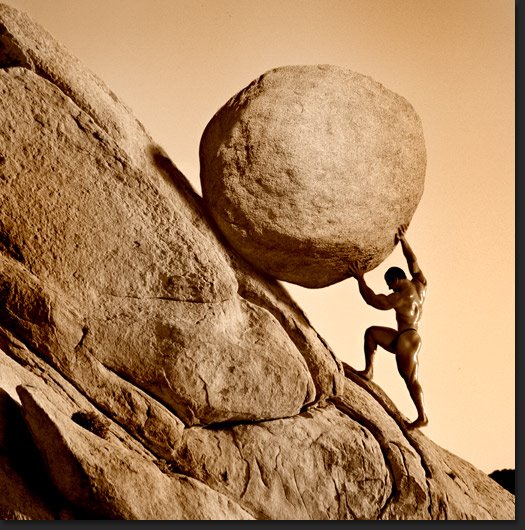
"The struggle itself towards the heights is enough to fill a [wo]man's heart." (No, this is not my lover)


 Posts
Posts


